
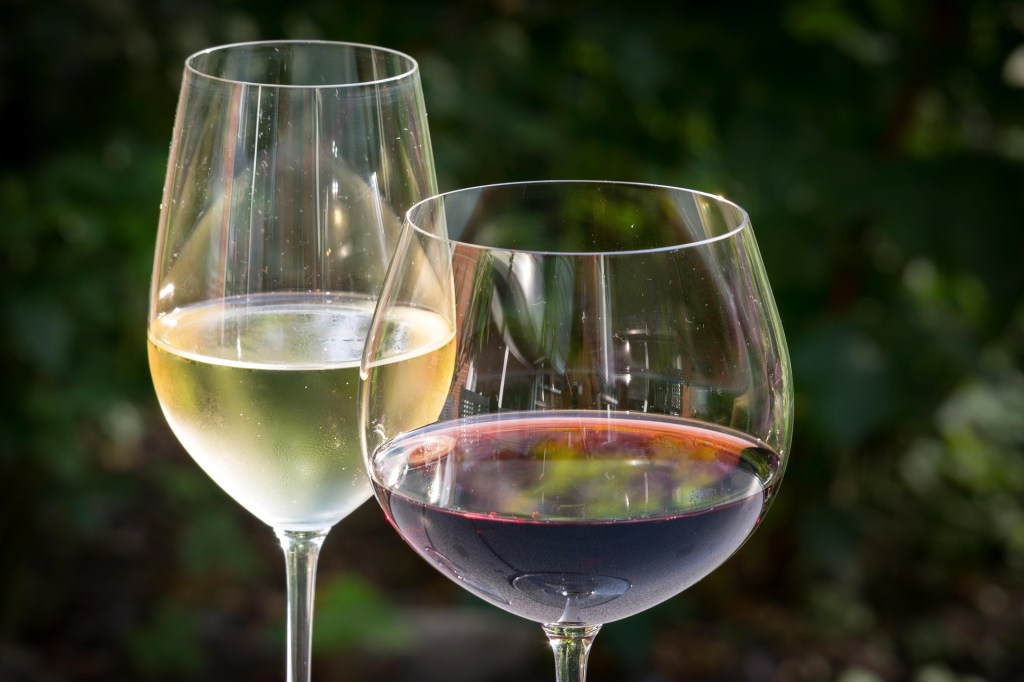
It’s Back! Join us for our annual Slovak Wine Tasting. We’ll enjoy a 3-course Slovak meal with guided wine tasting.
Saturday May 20, 2023
1:00-3:30 p.m.
Braddock’s Restaurant in the Renaissance Hotel
107 6th Street Pittsburgh, PA 15222
$45 members, $55 non-members.
Space is limited to 50 people. RSVP by May 10, 2023. Email jtsekno@al.com to RSVP. Please note total spaces reserved and number of members, including their names. You can pay by check or Venmo. Mail your payment to:
WPSCA 2000 Cliff Mine Road, Park West Two, Suite 210 Pittsburgh, PA 15275.
Venmo us @WPSCA, please note members’ names.
WPSCA 2023 Wine Tasting Notes
Trinity Oaks Chardonnay 2020
13.7% ABV
Region: Lodi-Delta, California
Notes of oak, butter & vanilla, white fruits such as apple, pear and apricot. A hint of citrus, medium body, best served very cold. Creamy and freshly acidic.
Mon Frere Pinot Noir 2021
13.9% ABV
Region: Combo of Sonoma Coast vineyards, Santa Rita Hills Vineyards in Santa Barbara and Santa
Lucia Highlands and Vineyards in Monterey, California
Vibrant purple-garnet. Enticing aromas of cherry, raspberry and plum, and a faint violet hint surrounded by subtle spice from integrated French oak barrel aging. Well balanced palate with refreshing acidity and luscious tannins yielding a plush weight.
Slobodne Vinarstvo Majer Red NV (Non-Vintage)
12.5% ABV
Purchased from www.kingstonwine.com. They have several Slovak wines; search by country and these can be shipped directly to your Pennsylvania home; unsure of other states liquor laws.
Region: Malokarpatska (Trnava, Slovakia)
Varietal: Cabernet Sauvignon, Alibernet, Blaufrankisch, aka Frankovka Modrá.
Frankovka Modrá is another grape variety widely planted in the wide central European region, also sometimes called as Pinot Noir of east for its character reputation. Exact origin is unknown, recent DNA profiling has shown that Frankovka modrá is cross between Gouais Blanc and other unidentified grape variety, possibly Bauer Silvana. This variety is most common red grape variety to be found in all wine producing regions in Slovakia. Variety requires good and dry locations and is late – ripening.
Tastes of red forest fruits, hints of pepper, minerals, cumin, and dried oregano. Quite complex and acidic overall, great earthiness. A good example of the type of rustic wines made in small villages for local consumption.
Zemianske Sady (old form: Nemeškert) is a village and municipality in Galanta District of the Trnava Region of south-west Slovakia. In historical records the village was first mentioned in 1156. The municipality lies at an altitude of 150 meters above sea level and covers an area of 8.053 km². It has a population of about 880 people.
Zemianske Sady is a family run estate that has been making wine in Hlohovec since 1912. At its inception, the estate was primarily a tobacco farm that also produced wines which sold locally and were beloved by the art scene in Prague. Due to the war and political strife, the estate stopped production until 1997, where now, the fourth and fifth generations have taken over. The vineyards were replanted and the cellar reconstructed, and in 2010, the first vintage under the name Slobodné Vinárstvo was born. In 2016, they began farming their 17 hectares in an environmentally conscious way, and became members of the oldest biodynamic farmers association in Austria. Bees are kept and herbs are grown to promote a healthy soil climate, which they consider paramount to making great wine. They are dedicated to minimal intervention winemaking and only grow varietals that are historically from the area and suited to the climate
Apimed Original Slovak Mead
13.5% ABV
Purchased from https://vinoshipper.com/shop/centeur_imports from Brian and Jana Green.
Mead is produced by fermentation of a honey solution with the help of a noble culture of wine yeast. MEAD IS CONSIDERED AS A SOURCE OF LIFE, WISDOM, COURAGE AND STRENGTH. Our ancestors, the old Slavs, drank mead at important family and tribal celebrations, from which it can be concluded that they attached an exceptional and festive character to this drink. MEAD is considered the oldest drink in the world. It is believed that the first mead was created even before man appeared on Earth. In the hollows of trees inhabited by bees, honey fermented together with rainwater and the first mead was created. It was later discovered by the first person and he liked it so much that he started making it for his own use.
Pure honey bouquet, a touch of lime in the background and extraordinary taste satisfy everyone, who is looking for more than just pleasure when drinking mead. Amber gold color. Can be enjoyed cold or heated to 55-60 C (130~ F) and when warmed can bring out the nose of blackberries. Also used in making cocktails, with lemon and lime juices and club soda and Vinea (a carbonated grape-based soft drink invented in Czechoslovakia in 1973 by Slovak Ján Farkaš, a biochemist working for the Research Institute for Viticulture and Wine-making in Bratislava. Production of the drink began in 1974).
From Jana Green: “My family is focused on a production of classic wine, mead has special features thank to a honey which it is made from. Production process is exactly same like by wine – it is also made in huge containers and every step is similar. Peter Kudlac is the founder of Apimed. He is one of the main beekeepers in Slovakia. His Company was founded in 1998. He and his wife have dedicated all to their company. Their mead was first sold during fairs and Christmas markets and it has been growing. These days you can visit Medolandia in a small village Dolna Krupa. It was a project supported by the EU. There is a museum, spa, restaurant and many other attractions. Peter has a unique product; he never mixes different types of honey together. You ordered the mead made from linden tree honey. We like to drink this one also with a lemon. it is used also to prepare cocktails.”
 Western Pennsylvania Slovak Cultural Association